New
ROB
My signature synth, analog in every voice.
€24.95 once. One price, no subscription.
312 downloads
Sixteen voices, four oscillators each, a transistor ladder filter you can really push, and sixteen voice cards that never sound quite the same. Watch every voice move on screen while you play.
“Amazing synthesizer, Love the sequencer you can even create poly sequences. love it! better then serum if you ask me.”
“O my god, Dude that interface is kicking a.. Everything works like a real analog monster :-)”

Get the highlights.
 RoutingLet the oscillators talk to each other.
 FilterThe filter is where ROB growls.The low-pass is a transistor ladder, built the way the real circuit works.
Take a closer look.
A synth on your desk.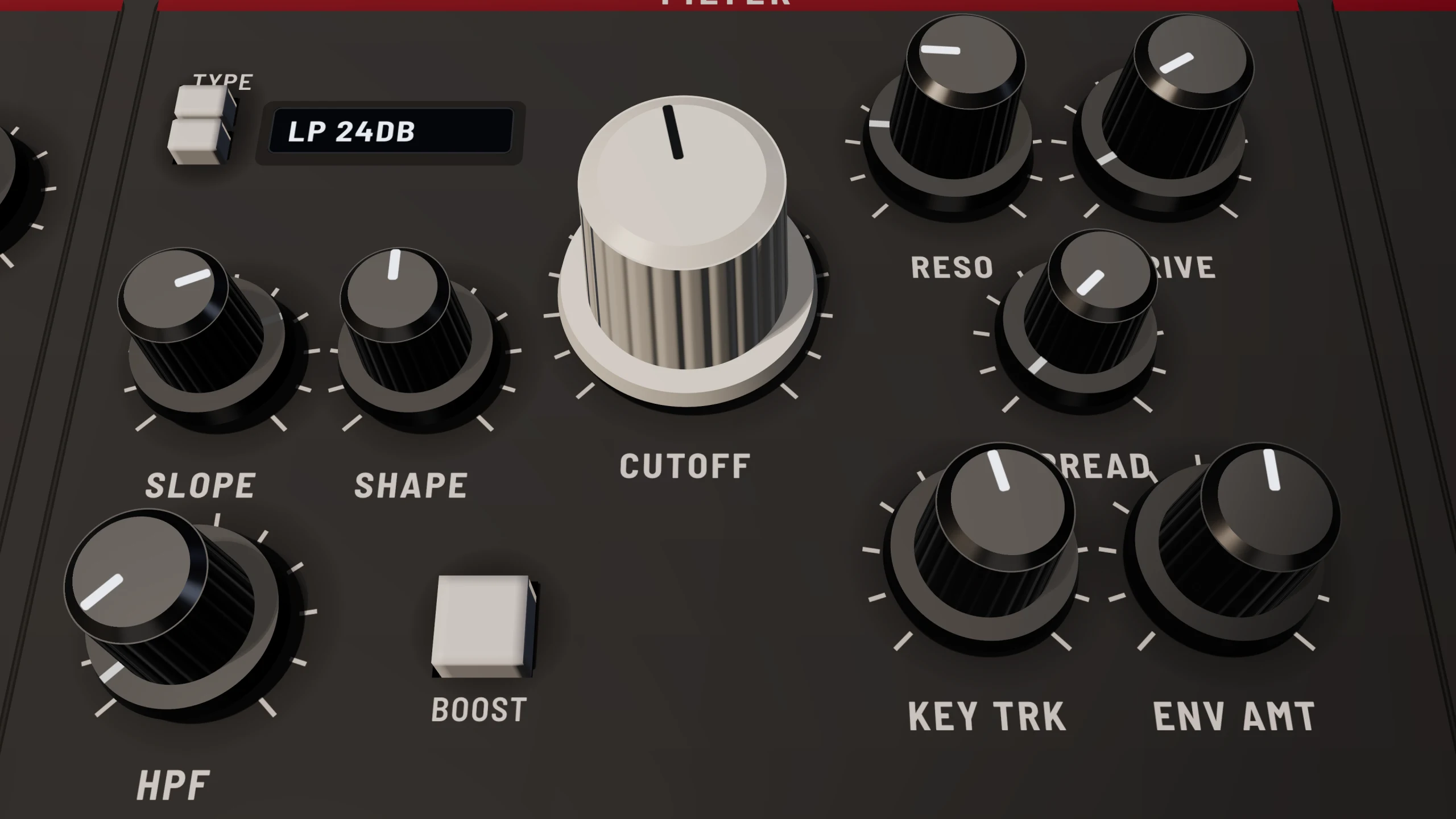 A synth on your desk.
 A synth on your desk.Presets and steps under your hands.
 Presets and steps under your hands.
 Presets and steps under your hands.Four oscillators in every voice.Let the oscillators talk to each other.
 Let the oscillators talk to each other.The filter is where ROB growls.
 Envelopes that feel analog.
 Envelopes that feel analog.
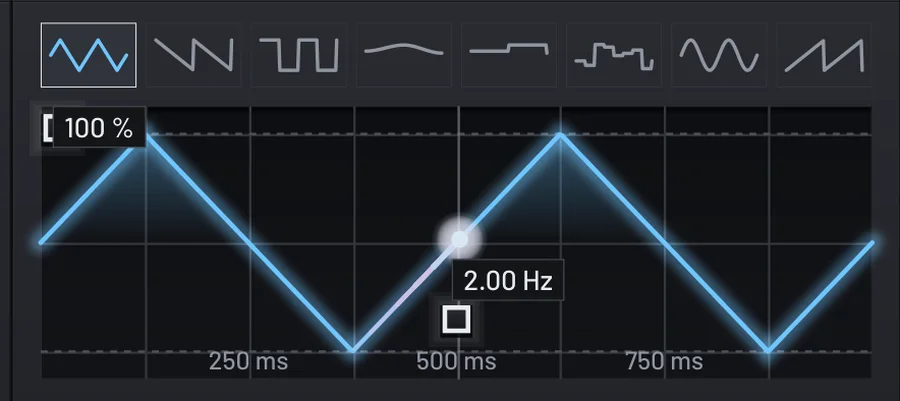 Four LFOs, drawn as they move.
 Drag a source onto anything.
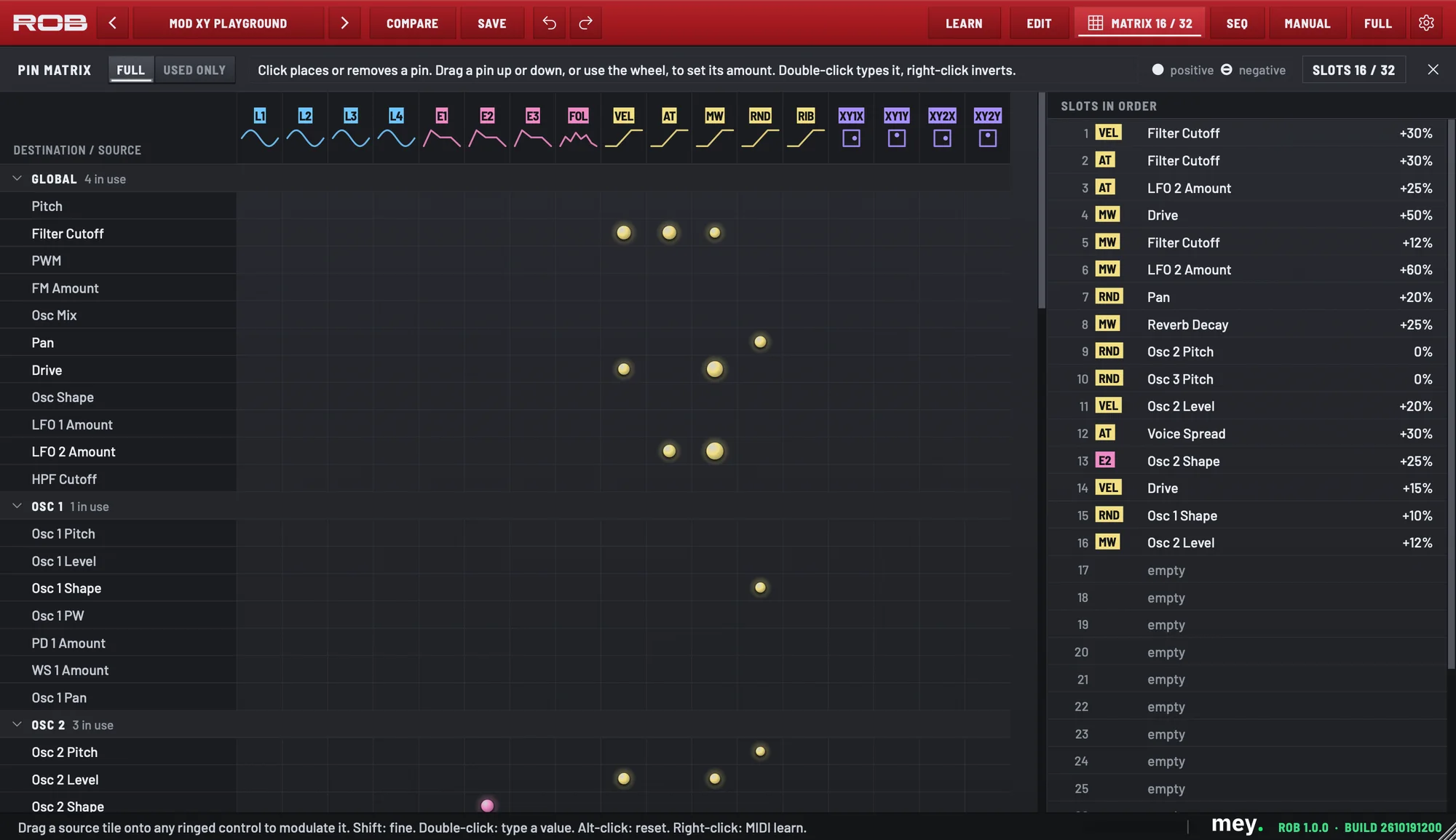 Drag a source onto anything.
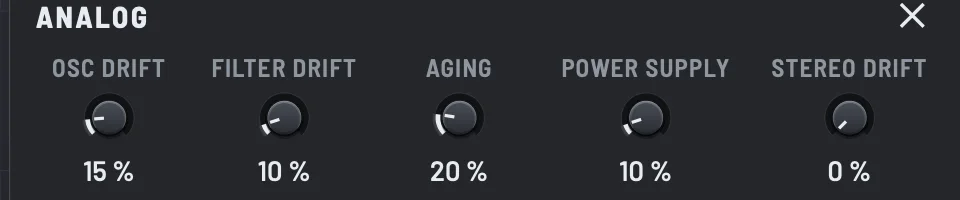 Sixteen voice cards, none the same.
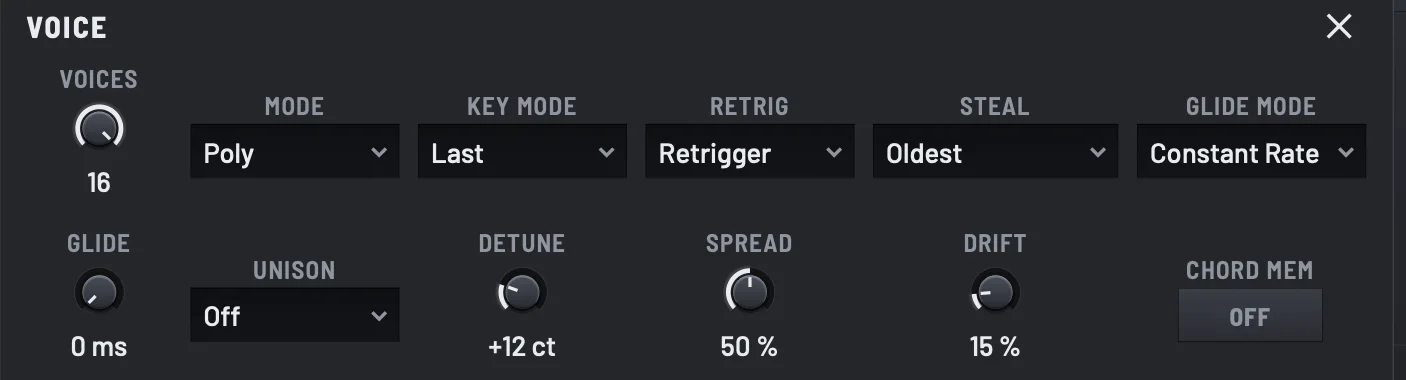 Poly, mono, legato, unison.
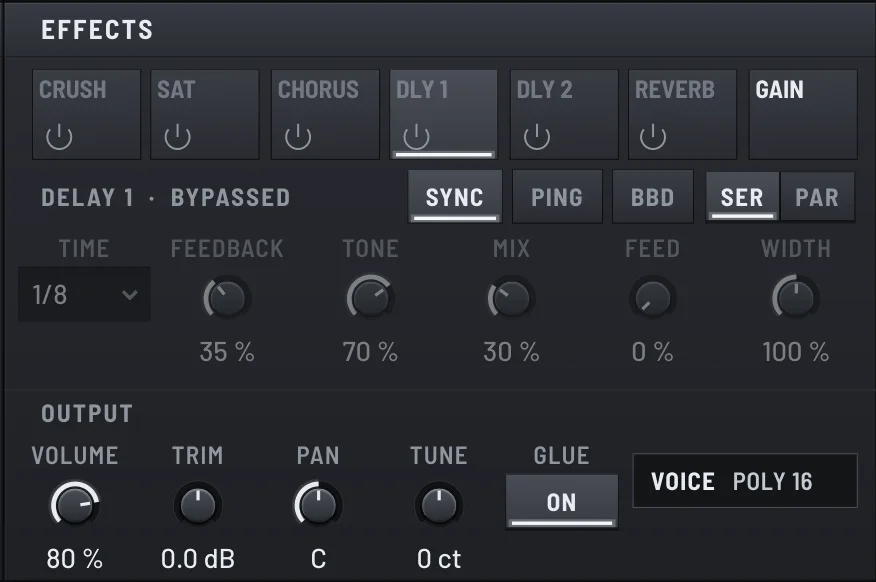 A full effects chain on board.
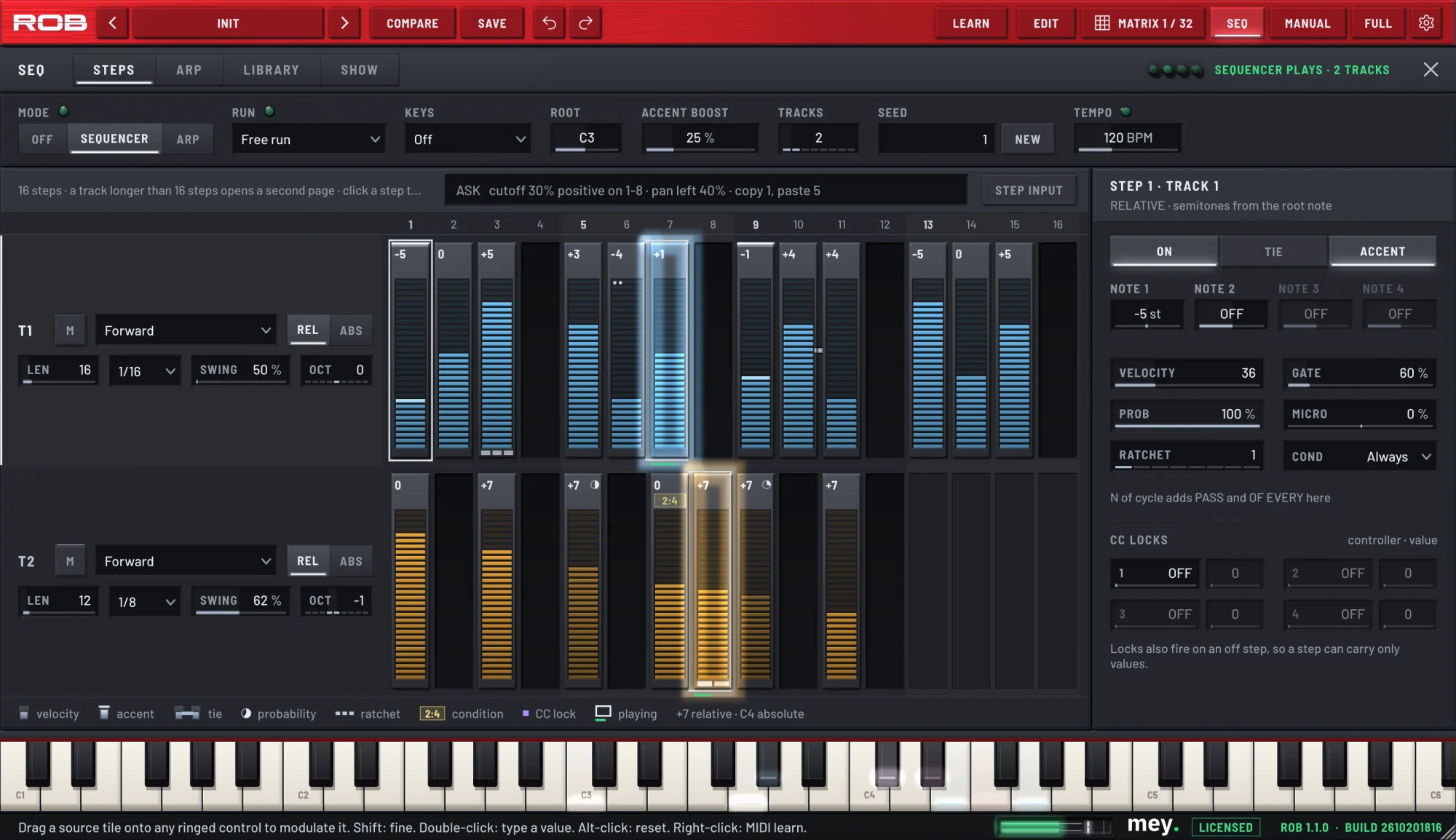 A sequencer you can read at a glance.
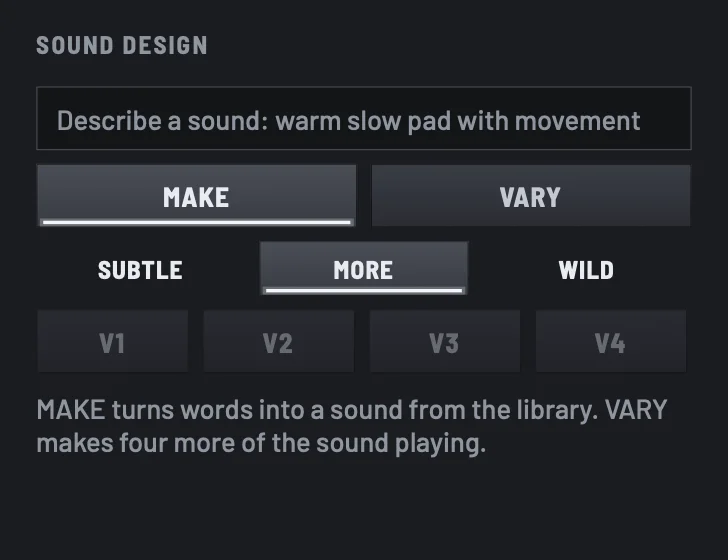 Ask for a sound in words.
Hear it first
Mozart, on thirty-three ROBs.
Lacrimosa, played on 33 instances of ROB, every one on a factory preset you can load yourself. Seven groups on seven channels: press PLAY and follow the melody above the desk, then SOLO the choir or the brass to hear one sound on its own. Click a note to play from there.
The groups add up to the mix as it was rendered: the faders start at -6 dB, and with every one at 0 and every knob in the centre you hear the demo itself. SOLO one group or more to hear their sounds on their own. Double-click a fader or a knob to set it back where it started.
Film
Watch it play.
Play a chord and the live spectrum and every voice’s cutoff curve move in the filter, dots ride the envelopes, and the source strip traces every source. Picture recorded from ROB itself.
Hardware
A synth on your desk.
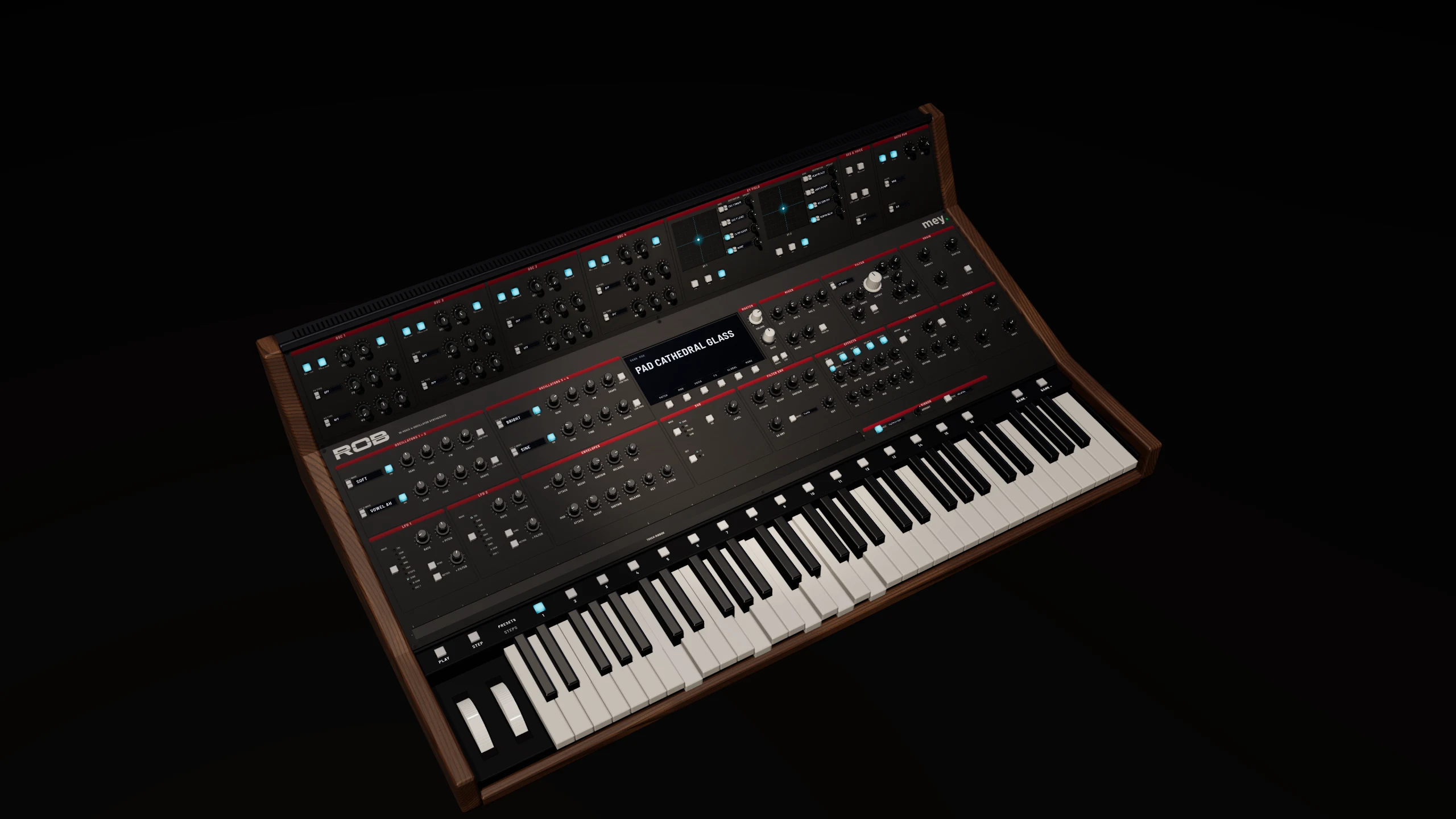
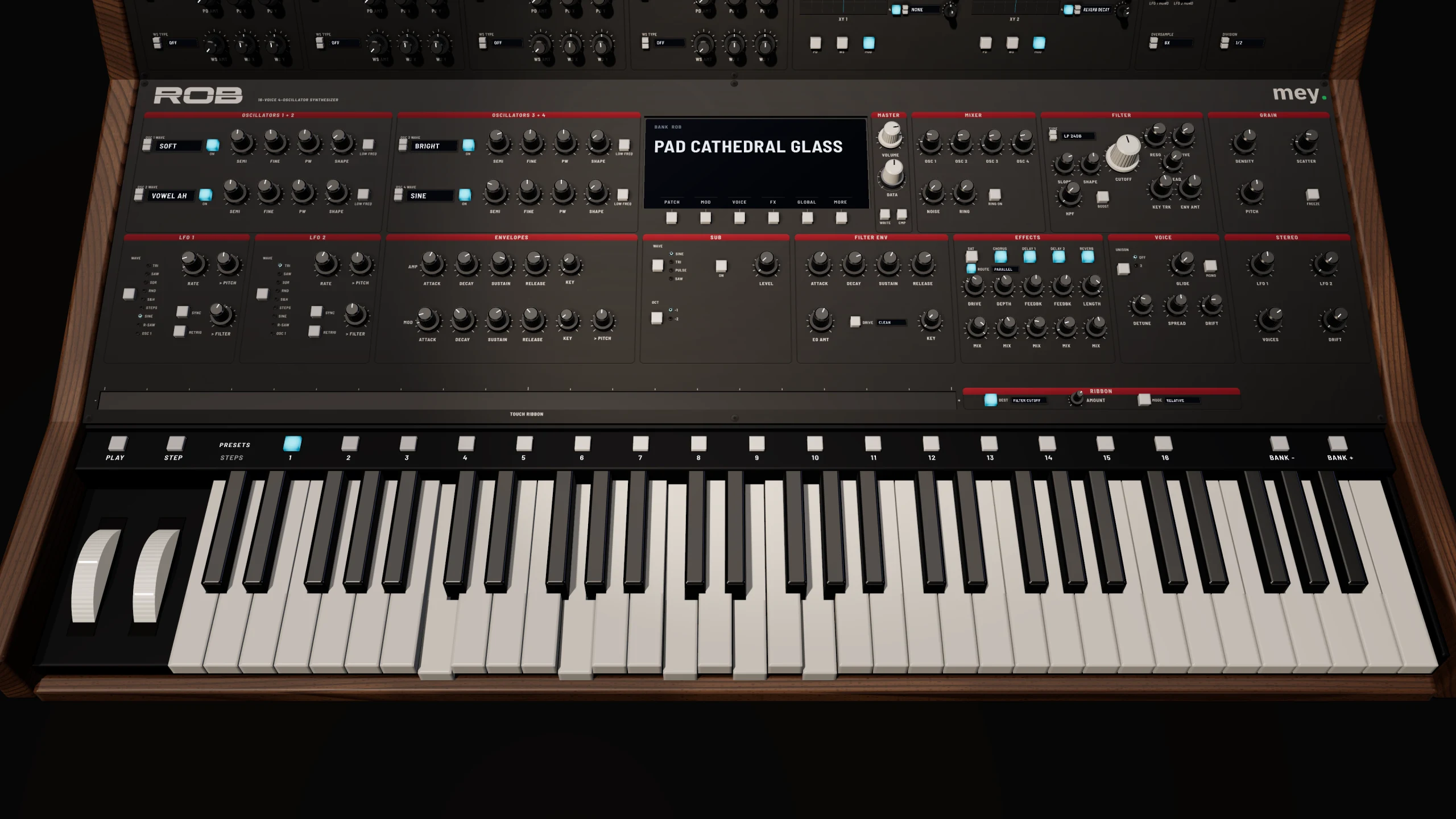
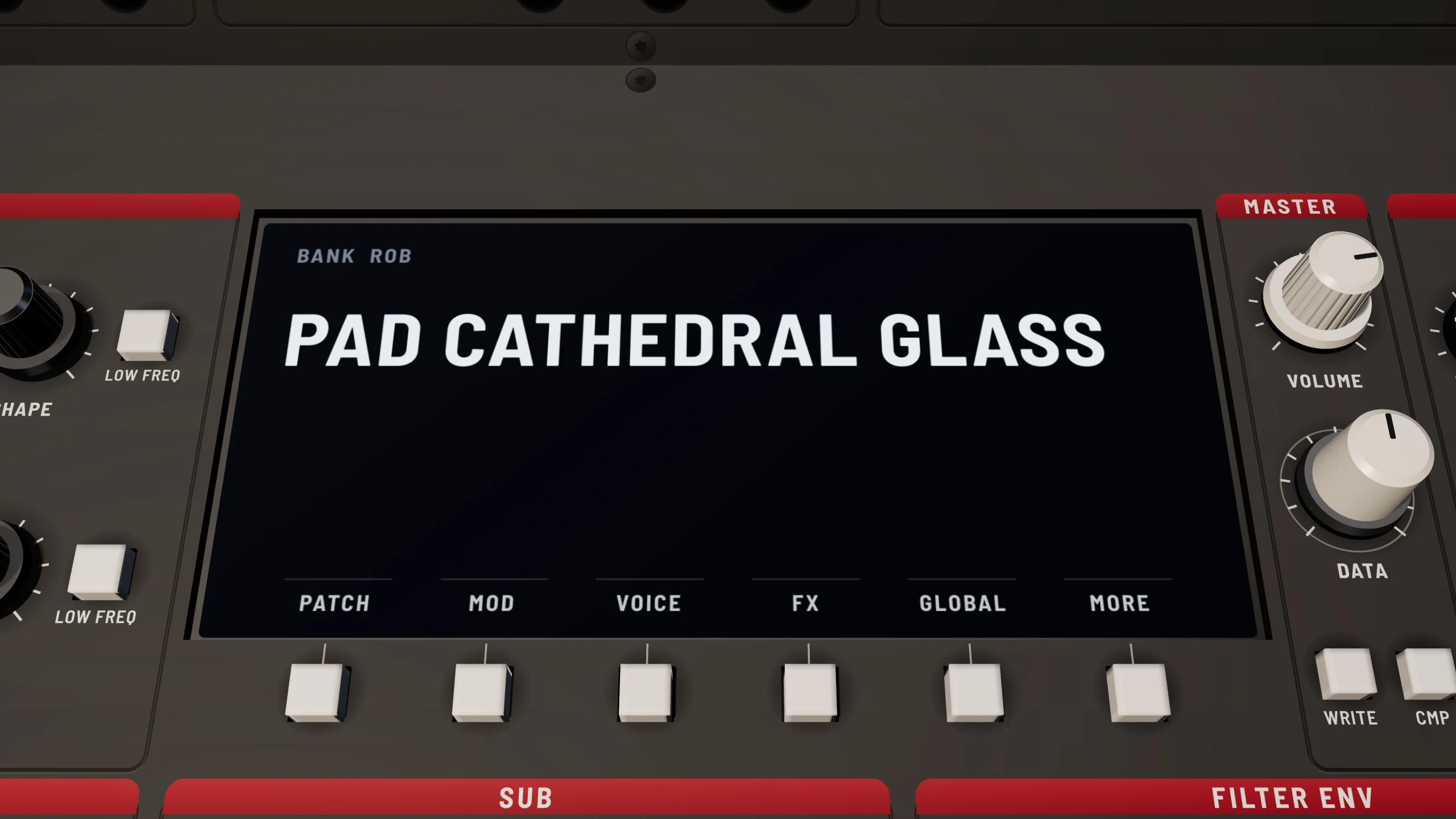
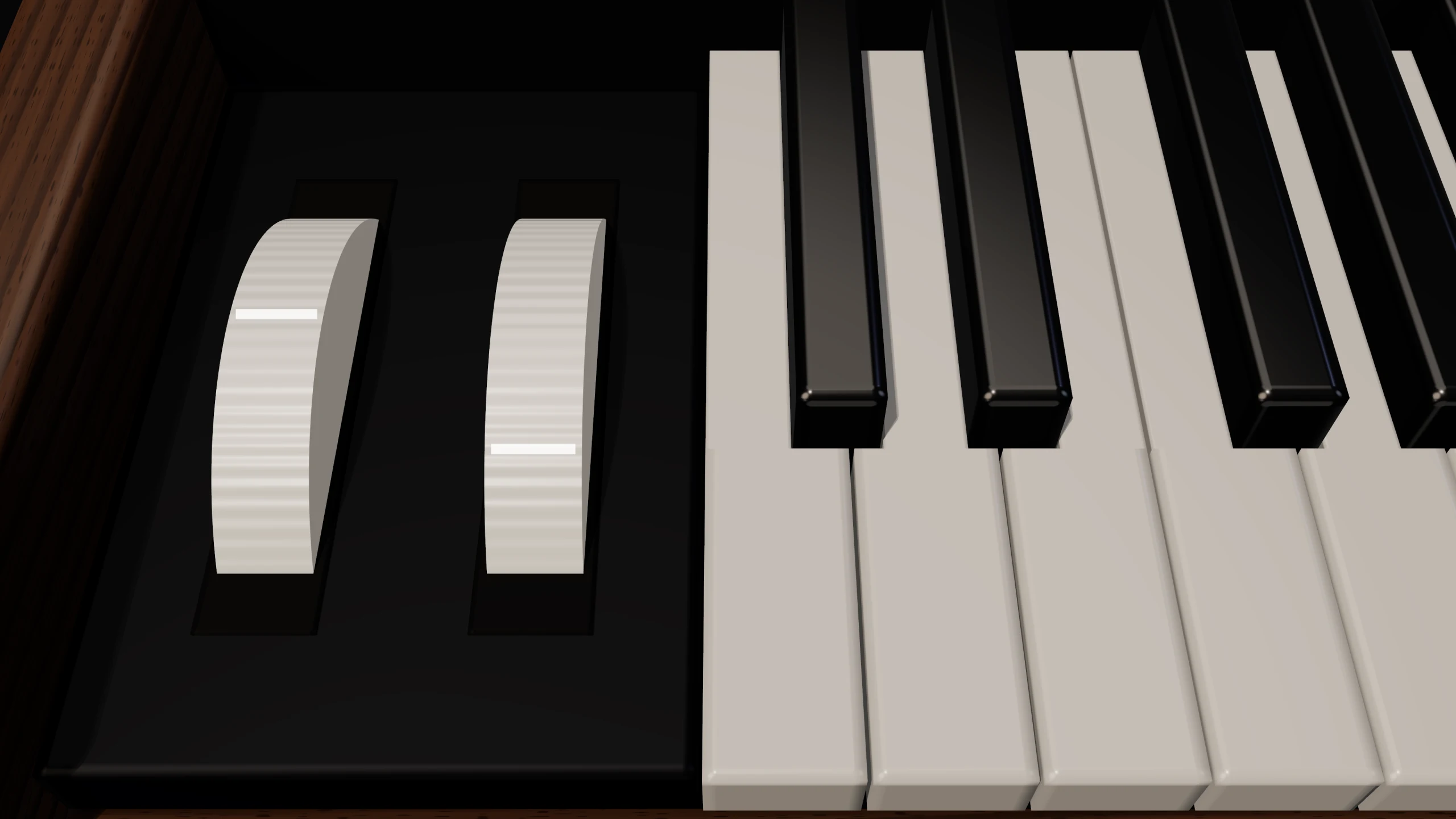
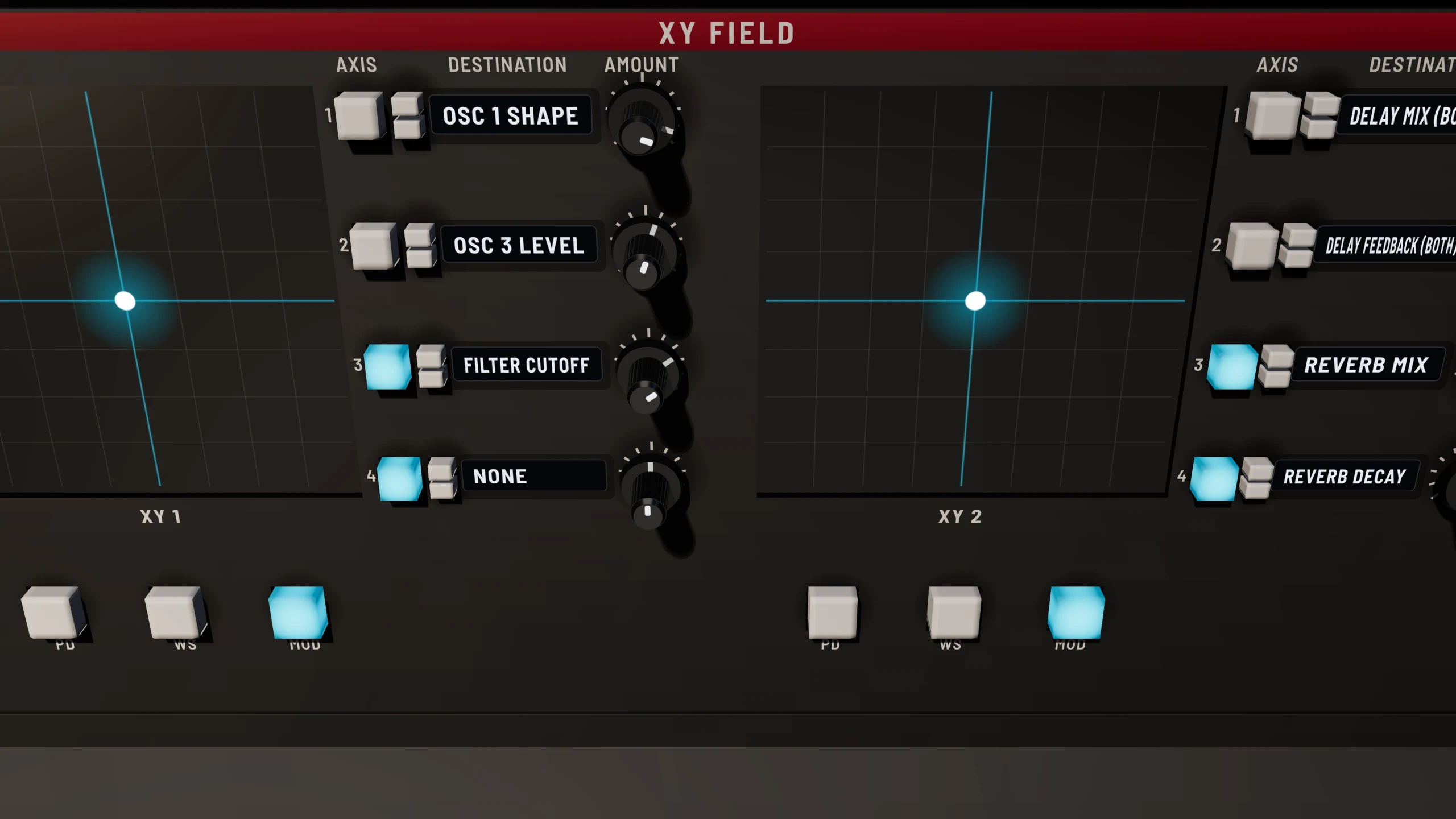
On the Mac and on Windows, ROB opens as a hardware unit: two plates of knobs and keys between wooden cheeks, a 61-key keyboard with pitch and modulation wheels, the touch ribbon and two XY fields. Turn a knob, press a key, play the keys. EDIT opens the full editor.
Anthracite plates with a red title bar on every module, and one colour for everything that is on. VOLUME, DATA and CUTOFF have white caps, so your hand finds them first. The unit is drawn on the graphics card: with Metal on the Mac, with Direct3D 11 on Windows.
The rail
Presets and steps under your hands.
On the rail above the keys: PLAY and STEP over the wheels, sixteen keys and BANK down and up. The sixteen keys load the sixteen sounds of a bank.
Press STEP and they become the sequencer's steps. A click switches a step on or off; a note or a chord you play is written into the step under the cursor, and the cursor moves on. BANK down and up page through steps 17 to 128.
Oscillators
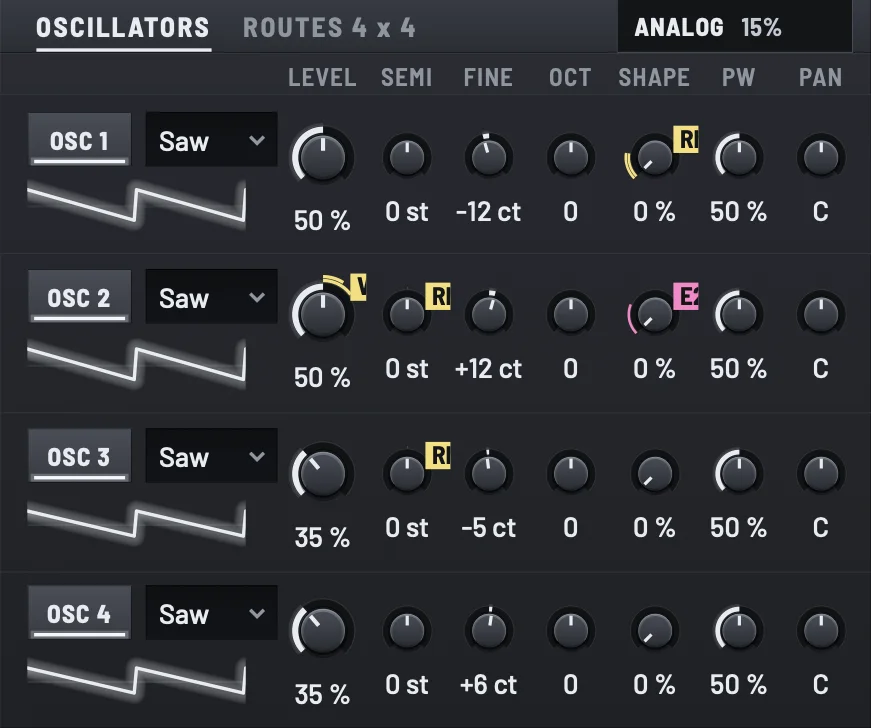
Four oscillators in every voice.
Each one plays a saw, triangle, pulse, sine, white or pink noise, or one of ROB’s wavetables. Turn SHAPE and it morphs smoothly from one waveform into the next, so you can play the waveform itself.
They run at eight times your host’s sample rate, so high notes stay clean. With the analog behaviour turned up, the saw bends like a charging capacitor, the way the old circuits did.
Routing
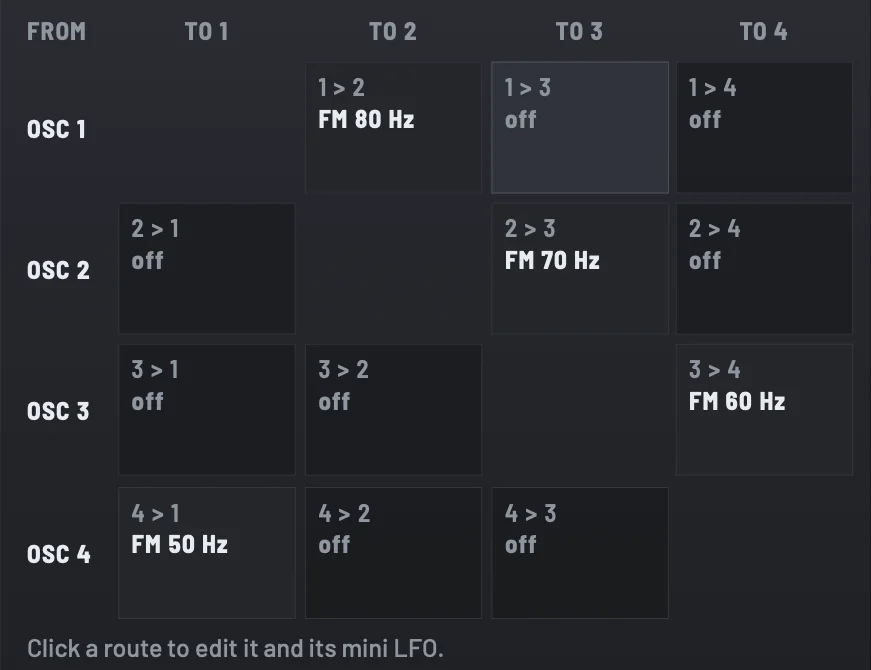
Let the oscillators talk to each other.
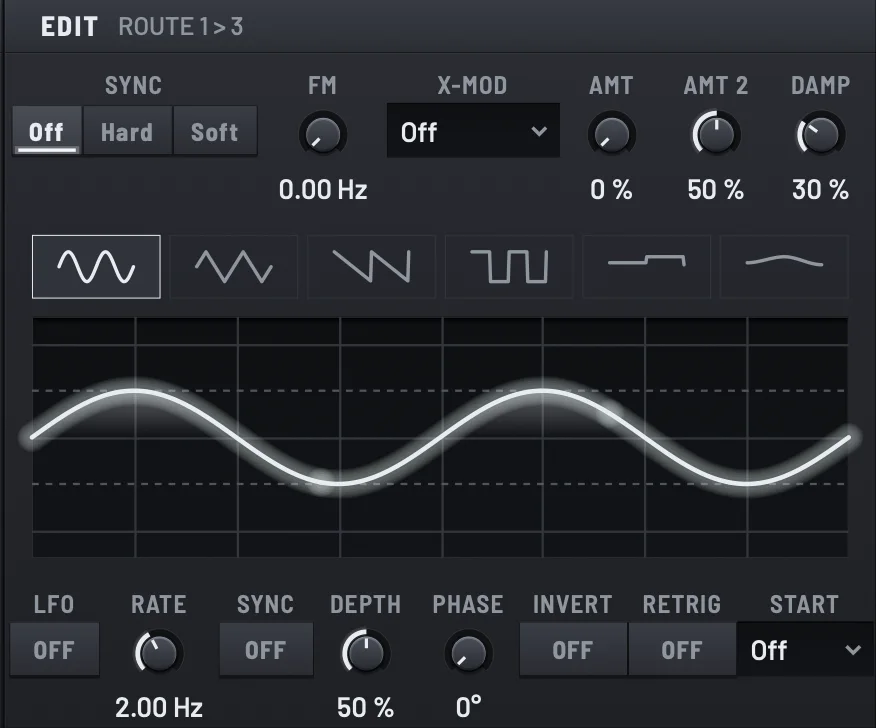
ROUTES is a 4 × 4 grid. Any oscillator can sync, FM or cross-modulate any other, and every route has its own depth and its own little LFO. Poly Mod sends the filter envelope and oscillator two to oscillator one, as the classic polysynths did.
Filter
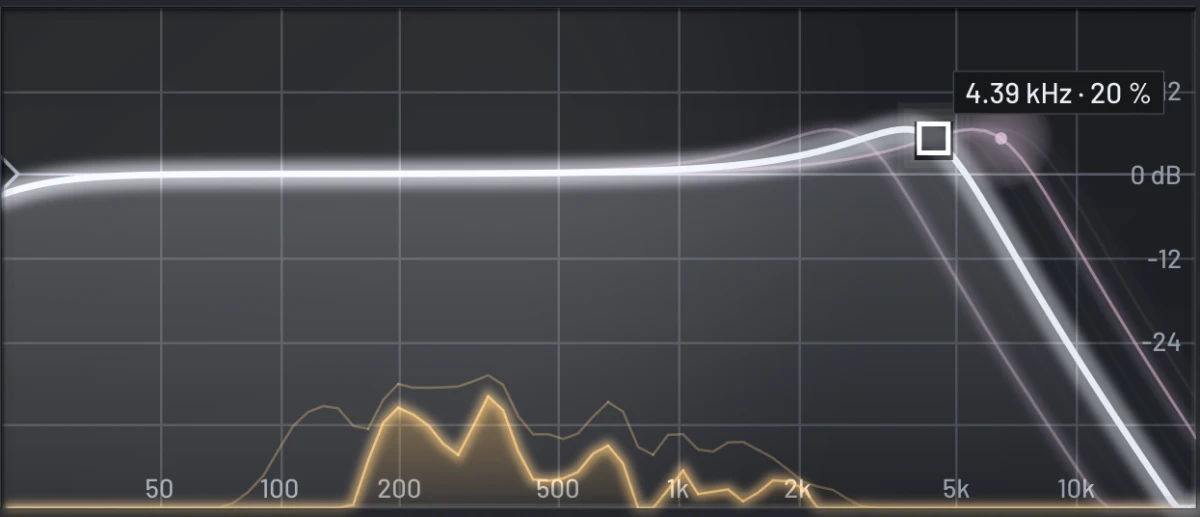
The filter is where ROB growls.
The low-pass is a transistor ladder, built the way the real circuit works. Every stage saturates. Turn the resonance up and it sings, and when it self-oscillates it stays in tune.
And you see what you hear: ROB’s own output runs as a live spectrum behind the curve, and every voice draws a faint cutoff line of its own.
Envelopes
Envelopes that feel analog.
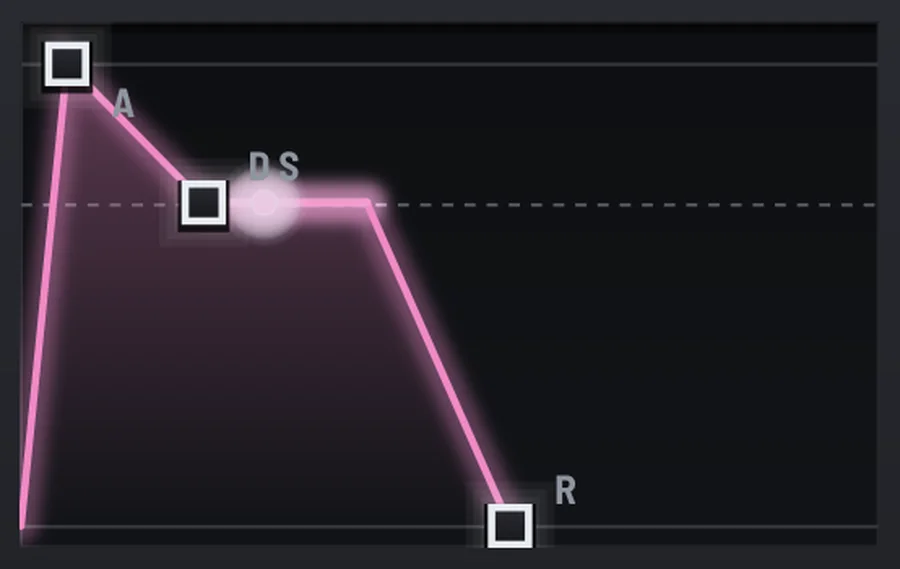
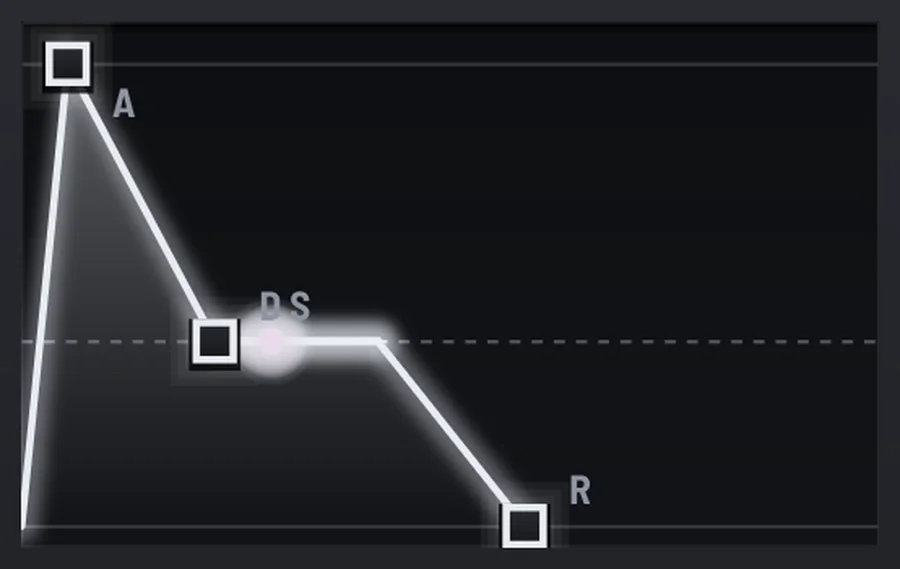
Four ADSR envelopes, from one millisecond to eight seconds; drag the curve to shape it. Every voice that sounds rides its envelope as a dot with a little trail. Play chords and you see one release run into the next.
LFOs
Four LFOs, drawn as they move.
Eight shapes, free or synced, per voice or one for all. On screen you see where every voice is on the waveform. Hold a chord with free-running LFOs and you watch the dots drift apart.
Modulation
Drag a source onto anything.
Seventeen sources run along the bottom, each tile showing what its source just did. Drag a tile onto any control with a ring and it’s modulated. Drag the ring to set how much.
Behind it sits a 32-slot matrix you can open as one big pin board, every destination against every source.
Analog voice
Sixteen voice cards, none the same.
Every voice is a card with its own trimmers for tuning, cutoff, resonance, envelope speed and pulse width, all from the same batch of parts. Notes rotate across the cards, so a repeated note never sounds exactly the same twice.
The oscillators drift, the filters drift, and a slow ripple runs through the whole instrument like a power supply under load. And it all stays in tune, within a few cents.
Voice
Poly, mono, legato, unison.
Sixteen voices, or mono and legato with note priority and four glide modes. Unison stacks voices with detune, spread and drift, and chord memory plays a whole chord from one key.
Effects
A full effects chain on board.
Crush, an oversampled saturation, chorus, flangers and phasers, two tempo-synced delays with a bucket-brigade mode, an auto pan, and a reverb with room, hall, plate and spring. At the end, GLUE and an output stage that keeps every preset at the same loudness.
Sequencer & arp
A sequencer you can read at a glance.
Up to eight tracks, each with its own length, direction and swing. Every step holds up to four notes, with velocity, probability, ratchets, conditions and controller locks.
And you can simply ask. Type “cutoff ramp 20% to 80% all” or “copy 1” and “paste 5”, in English or Dutch, and ROB does it.
Sound design
Ask for a sound in words.
Type “warm slow pad with movement” or “dark punchy bass” and press MAKE. Name a style and ROB brings a pattern in that idiom. VARY gives four variations on whatever’s playing, every one in tune and just as loud.
Tech specs
- Voices
- 16, poly, mono or legato; unison; chord memory; four glide modes
- Oscillators
- 4 per voice: saw, triangle, pulse, sine, noise, pink noise, wavetables; shape morph, pulse width, phase distortion, wave shaper, up to 5 spread copies; sub, noise, ring
- Routing
- 4 × 4: hard and soft sync, FM (through zero), cross-modulation, a mini LFO per route; poly mod
- Filter
- Transistor ladder LP 24 / LP 12, LP 24 with SLOPE from one to four poles, LP 12 OTA, state-variable HP / BP / notch, both zero-delay feedback with saturation in the loop; CHARACTER: phaser, frequency shifter, vowel, comb, diode ladder, dispersion and grain cloud; drive with 4 characters; resonant high-pass with boost
- Analog
- 16 voice cards from one batch, oscillator and filter drift, power supply, stereo drift, saturating mixer and VCA, circuit hiss
- Modulation
- 4 envelopes, 4 LFOs, envelope follower (own voice or sidechain), velocity, aftertouch, mod wheel, random, ribbon, 2 XY pads; 32-slot matrix
- Effects
- Crush, saturation, chorus / flanger / phaser, two delays (series or parallel, BBD, ping-pong), reverb (room, hall, plate, spring), glue, output limiter
- Sequencer
- 8 tracks, 4 notes per step, velocity, gate, probability, micro timing, ratchets, conditions, 4 CC locks; arpeggiator; library and show; step input
- Presets
- 272 factory sounds in seventeen banks of sixteen; MAKE: sound design from words, offline; variations
- Interface
- 3D hardware unit with a 61-key keyboard, pitch and modulation wheels, ribbon and XY fields, drawn with Metal on macOS and Direct3D 11 on Windows, and the 2D editor
- Formats
- macOS: VST3, Audio Unit, Standalone · macOS 10.15 and later, Apple silicon and Intel
Windows: VST3, Standalone · Windows 10 and 11, 64-bit
Questions
What do I get for the trial?
The whole instrument, for 7 days on each computer, with nothing switched off. The days start the first time you open it.
What does a licence buy?
One licence key for two computers, in VST3, Audio Unit and the standalone app. There is no subscription and no dongle.
Does it run on Windows?
Yes. Windows 10 and 11 (64-bit) as VST3 and a standalone app, and macOS from 10.15 on, on Apple silicon and Intel.
How heavy is it?
The voices are spread over your processor’s cores. On an Apple M1 Pro, an eight-note chord on a typical preset uses about a sixth of the audio thread’s time. The displays run on the graphics card.
Does it need the internet?
To start the trial and to activate a computer, yes. After that it keeps working offline for up to 45 days.
How do I pay, and when do I get the key?
You pay on Ko-fi. The key is emailed to you, usually within a minute, together with the download link.
Try it free for 7 days.
Everything on. No account, no email, no card.